


From a Sigma introduction to $17M Seed Round: The story behind fonio.ai
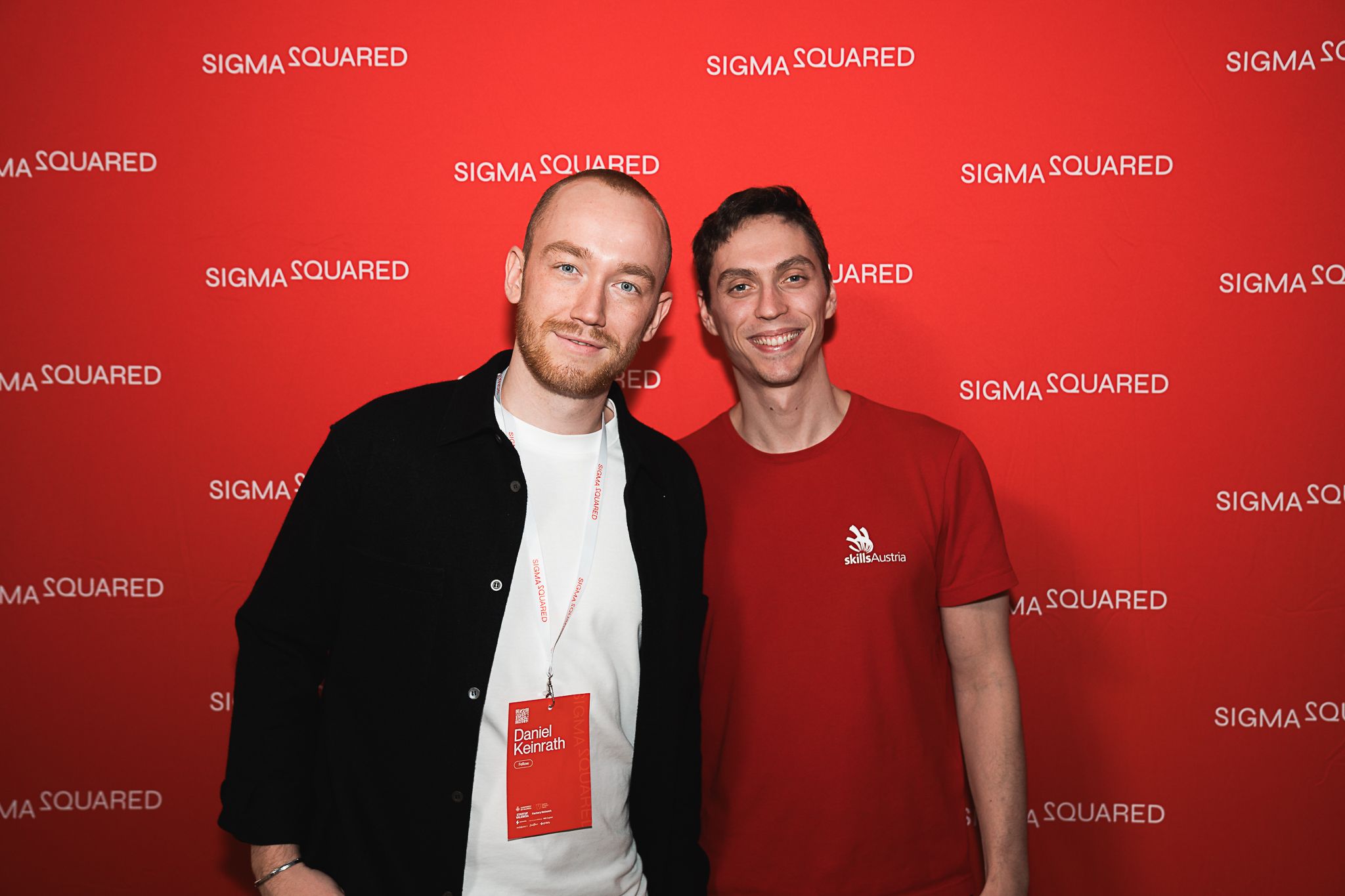
Daniel Keinrath and Matthias Gruber met through Sigma Squared Society. Less than two years later, they are building one of Europe’s fastest-growing AI companies with more than 10,000 customers, $10 million in ARR, and ambitions that go far beyond phone calls.
Before fonio.ai had a product, it had customers. Daniel Keinrath had an idea for an AI phone assistant for small and medium-sized businesses, but the person he wanted to build it with wasn’t interested. Matthias Gruber had just come out of years of working in scale-ups and wanted a break. He turned Daniel down. Twice.
So Daniel decided to prove there was something worth building. Instead of waiting for a product, he went straight to the market and started selling the idea to potential customers. Within just a few weeks, he had clear proof that people were willing to pay for it.
That was enough to get Matthias on board.
Founded in Vienna in 2024, fonio.ai started with AI phone agents capable of handling customer calls, booking appointments, qualifying leads and taking care of support requests. By August 2026, the company had crossed $10 million in annual recurring revenue, was serving more than 10,000 customers and was handling around two million calls every month.
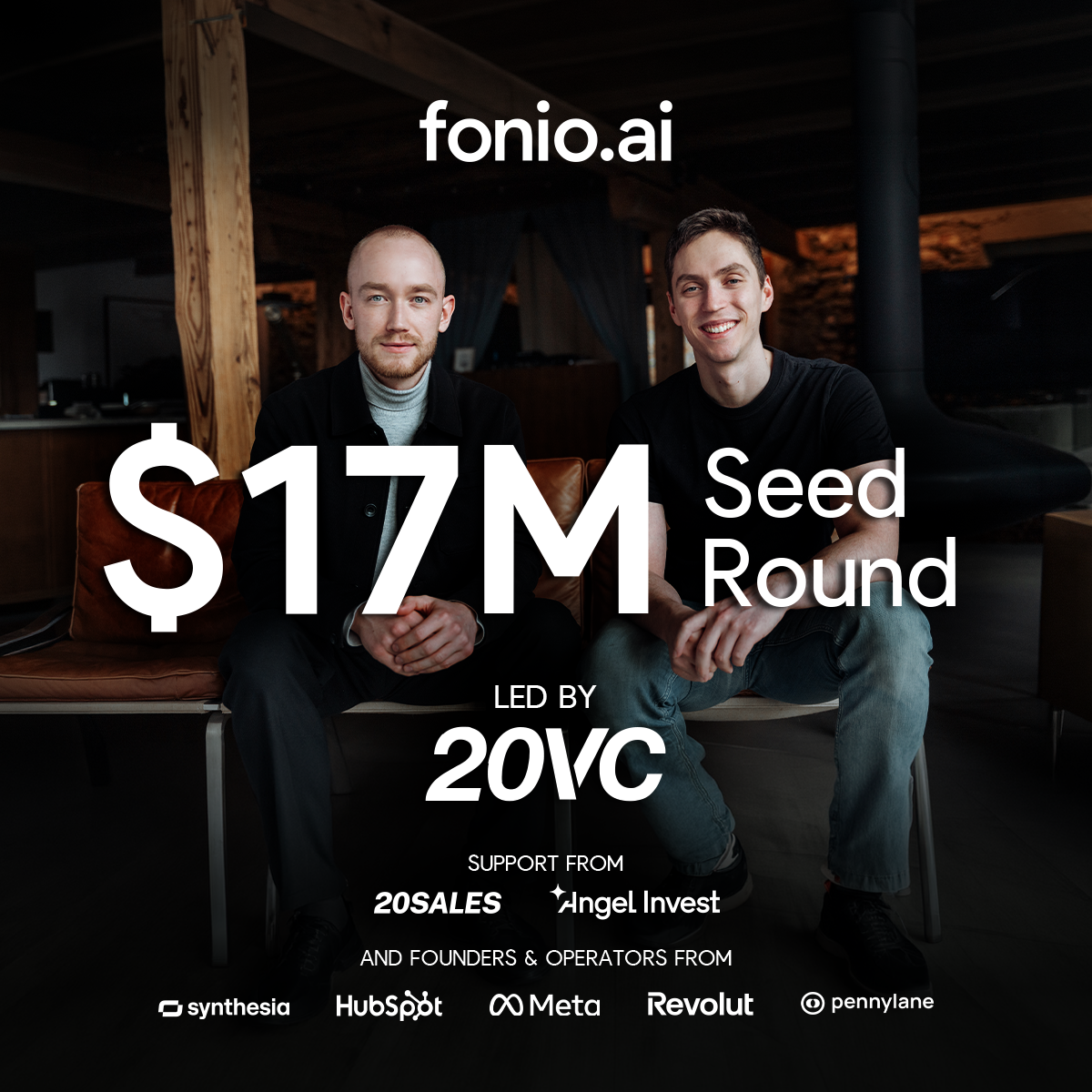
In June, fonio.ai raised a $17 million Seed round led by 20VC at a $140 million valuation. The company is now moving beyond voice into WhatsApp, email and chat, with a much bigger ambition behind it: becoming the AI operating system for small and medium-sized businesses.
And the partnership at the centre of all of it started with one shared connection: Sigma Squared Society.
We spoke to Daniel, co-founder of fonio.ai and Sigma Fellow, about how he met Matthias, the unlikely beginnings of fonio, what it takes to scale at this speed, and the ambition behind what they’re building.
You and Matthias both joined Sigma through the Spring Application Cycle in 2023. How did you actually meet?
We first met at a Sigma meet-up in Vienna, but the moment we really clicked came a little later. Through Sigma, we got tickets to attend the European Forum Alpbach, and we ended up spending a lot more time together there. We had some really good conversations, realised how similarly we thought about a lot of things, and that was probably the point when we really connected.
Sigma kept creating those opportunities for us to be in the same room and have the kind of deeper conversations that eventually led to us working together.
That makes the story quite funny in hindsight, because since starting fonio we’ve actually spent very little time physically together. We live around 90 minutes away from each other, but from the beginning we were extremely aligned on the strategy and how quickly we wanted to execute. At some point, spending three hours driving just to sit in the same room stopped making much sense.
Before fonio.ai, what were each of you building?
I started being an entrepreneur very early. At 16, I began organising parties across some of Vienna’s most prestigious clubs and venues. Eventually, together with some friends, we were running around 200 events a year at a very professional level and scaling them heavily through performance marketing.
After that, I founded my first software startup. It was an online platform connecting businesses with small and micro influencers and taking a cut of the deals. We eventually scaled the company to around 30 employees before selling it to a larger German marketing-tech company.
That was the point when I decided I wanted to do something completely new. I took a few months off and spent a lot of time in Silicon Valley looking at different AI use cases. I explored a bunch of things, including opportunities in energy, but what really caught my attention was the emergence of voice AI.
Matthias had a very different path, although he was always an entrepreneur at heart. He started as a programmer and was already selling for a family business at 15 while getting extremely good and extremely competitive at coding. He eventually became vice European champion in speed coding.
Later, he worked across several scale-ups, most recently as Chief Product and Chief Technical Officer, where he coordinated the pivot of a software platform and managed a team of around 100 people. At some point, he realised he didn’t want to spend all of his time being a manager anymore. He wanted to be hands-on again, so he took a break and started working on different products.
That happened to be roughly the same moment I started trying to convince him to build one with me.
Where did the idea for fonio.ai come from?
I first started thinking about it while spending time in Silicon Valley, when this new wave of AI was just emerging. Voice AI appeared shortly afterwards and, to be honest, it was completely unusable in the beginning. But the potential was obvious to me.
For the first time, we were getting a completely new interface for interacting with technology. Instead of clicking through software, filling in forms or navigating menus, you could simply talk to it.
What I also saw was the potential this could have for small and medium-sized businesses. For many of them, communication is still an enormous operational problem. A missed call can literally mean a lost customer, and most SMBs don’t have the resources to build sophisticated systems or huge customer-service teams themselves.
That looked like a very big opportunity.
The first version famously didn’t exist yet. What did the earliest days actually look like?
There was no first version. Matthias had told me that he didn’t want to build the company with me. He was still completely set on taking a break.
So instead of building anything, I started selling. I spent €200 on a website template, filmed myself for an ad and spent €1,000 on Meta ads. Every time someone came in as a lead, I called them myself.
I’d basically tell them: "For €3,000 I’ll build you a phone AI that works as your digital receptionist. Do you want that?"
There was a PowerPoint. There was no product. I told customers implementation would take two or three months, took down payments and kept selling. Within 14 days, I had closed ten customers.
Then I called Matthias again. That was finally enough proof for him to say yes.
It also became one of the principles we still use today: validate first, build second. Before we spend a lot of time developing something, we want to know whether customers actually care enough about it.
Did your previous companies prepare you for building something at this speed?
Being an entrepreneur from a very early age is probably the best possible preparation for a startup and scale-up journey. You learn to accept failure, to iterate, to fall and get back up, and to make the best possible use of whatever opportunity is in front of you.
With fonio, one of the big things we did differently was going to market immediately. Instead of spending months trying to perfect something, we listened to what customers were actually willing to pay for and built around that. It creates a much faster feedback loop and ultimately leads to better product decisions.
fonio.ai has grown extraordinarily quickly. What made that possible?
Relentless focus on execution, and always putting revenue and growth first.
When we started, I was sometimes doing more than 20 demos a day while Matthias was effectively building the product by himself. That creates an incredibly short feedback loop. You learn something from a customer and it can immediately influence what gets built.
But the other part is ownership. We try to maintain an extremely high level of ownership across every department and every team member. People make their own decisions and move fast.
The bigger you become, the easier it is to turn into a slow giant where every decision requires another meeting, another approval and another person. We really don’t want that to happen.
What have you learned from serving thousands of SMBs?
Things will always break, processes will always be broken, and you will never feel like you have enough structure.
That’s probably the unfiltered reality of building a hyper-growth company in an extremely competitive market. You’re constantly catching up. There’s always something that should already have been fixed. Something that worked with 500 customers suddenly doesn’t work with 5,000. Something that worked with ten employees breaks at 50.
You have to accept that you are always going to be behind on something. The question becomes: what matters most today? You keep looking for the levers that actually move the needle and focus on those.
What has been hardest to scale?
People and culture. Always.
Preserving the culture we built in the earliest stage while adding people incredibly quickly is by far the hardest part. We want to keep the level of ownership and intensity that got us here while the organisation becomes dramatically bigger.
That means finding exceptional talent in the first place, keeping the bar extremely high and making sure the company doesn’t gradually become slower as more people join.
You raised $17 million this year. What does the funding allow you to do that wasn’t possible before?
Nothing.
It basically lets us continue doing what we were already doing: investing extremely heavily in marketing and growth, making sure we still make the right decisions from an entrepreneurial perspective, and growing as fast and aggressively as is economically reasonable.
The important part for us is that funding doesn’t change the way we make decisions. We still want to think like entrepreneurs. Capital just gives us more capacity to keep pushing what is already working.
Why is the mission personal to you?
The world doesn’t run on giant US conglomerates. Most local economies are actually run by local small and medium-sized businesses.
We see it as part of our mission to empower them to compete with global providers and global products and to give them the tools, efficiencies and processes they need to be competitive, grow and become more profitable long term.
That matters for the resilience of local markets, for national sovereignty and for every local economy. If we fail at this, we end up fully reliant on global US companies that will have, see and work with all of our data.
For me, it’s also a question of European independence.
fonio started with phone calls. What kind of company are you actually trying to build?
One of the largest companies in the world.
Our target market is essentially infinite. There are hundreds of millions of SMBs around the globe, and every single one of them is technically our target.
The goal isn’t to stop at communication solutions, but to become the AI operating system for the SMB of the future. Voice is where we started, but the ambition goes far beyond phone calls.
What exactly that looks like, we’re not sure yet. The technology and the market are moving too quickly for anyone to know exactly where this ends.
But we’re confident we’re moving in the right direction.
Stay in the loop
Get the latest news about our Fellows, events, and opportunitiesdelivered streight to your inbox.
